

Ben Campbell is a marketer, but he's built two Buffer-powered apps designed around real social media workflows — from scratch.
Aside from the marketing, he's a self-described "advanced vibe-coder" who spent two years working at a coding school, picked up enough to understand file structures and API calls, and figured out how to use AI tools to move faster while he handled the strategy, workflow, testing, and product direction.
PostIQ was the first thing he built. It's a set of tools for the work that happens before you post to social — drafting, splitting threads across platforms, planning, saving hooks, and CTAs you want to reuse.
Ben has been a Buffer user for more than 8 years, using it personally and in his marketing roles. He built PostIQ for himself (at first) to pull his pre-publish work into a single process.
Then Buffer opened its API, and he realized he could wire PostIQ into Buffer directly and let other people use it too.
Here's how Ben built PostIQ and Receipts (an approvals tool for posts) with Buffer.
The API changed what PostIQ could be
When a Buffer teammate shared the idea of an 'ecosystem of apps powered by Buffer', Ben knew he was going to be part of it. "I want to be one of the first that has OAuth integrated and can say 'powered by Buffer,'" he says.
"I started exploring what's open in the beta. And sure enough, a lot of the core stuff that I needed is there: creating posts, scheduling posts, even creating threads."
Before the API, PostIQ was just Ben's personal toolkit. After, he could let users connect their own Buffer accounts, schedule posts from inside PostIQ, and skip the copy-paste step entirely. Buffer stays the publishing engine, and PostIQ handles the messier bits before that.

His actual workflow: write a LinkedIn post, run it through PostIQ's Thread Splitter to reformat for Threads and X (it gets the formatting right about 95% of the time), then schedule everything from PostIQ.
It lands in Buffer almost instantly. Ben tested this by having both apps open side by side. "I'll schedule something and Buffer will say 'you scheduled this one second ago' — which is awesome."
What's in PostIQ
The tool grew feature by feature, each solving something Ben was already doing manually or in a separate file.
'Thread Splitter' was the first feature. Ben posts on LinkedIn, Threads and X, and he wanted to write once and split without thinking about it. 'Content Calendar' came after he saw the same feature requested on Buffer's public roadmap and figured he'd just build it himself. It shows your scheduled posts, lets you tag reminders, and you can turn those reminders into drafts.
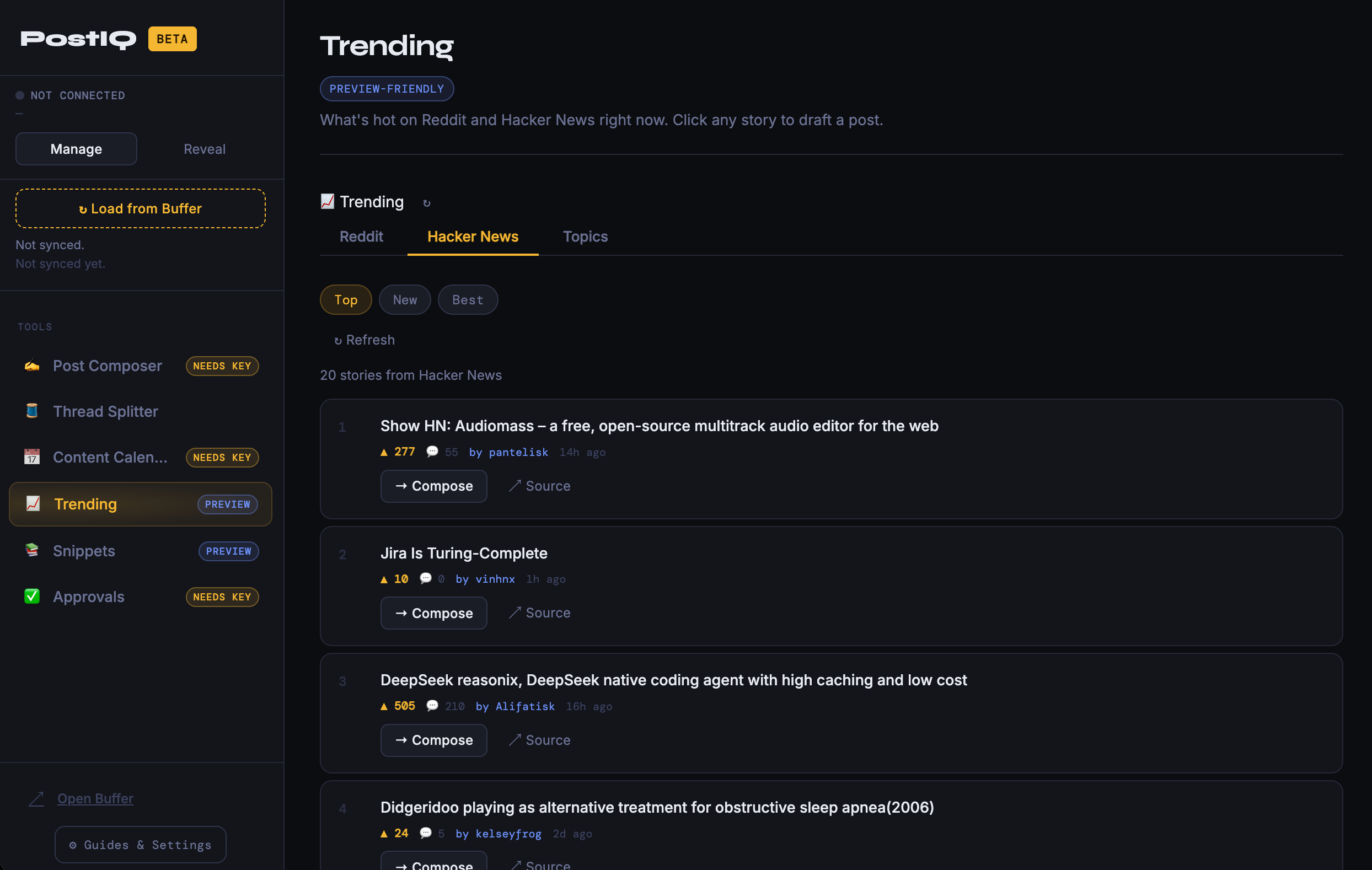
'Snippets' is probably the simplest one: a library of hooks and CTAs that Ben already had in a text file. He just moved them into PostIQ so they were actually part of the workflow. 'Trending' pulls inspiration from Reddit or Hacker News for when you're stuck on what to write about.
And then there's 'Approvals.' Ben built a no-login workflow for brand deal sign-offs: you send someone a link, they can comment and request changes, and once they approve, it generates a digital receipt. No accounts required on either side. No chasing people through email threads.
One API, two products
The approvals workflow started inside PostIQ, then became the foundation for Receipts as Ben realized it could stand alone as its own product.
While building PostIQ's Approvals feature, Ben realized that approval workflows for creators can be quite messy. Creators chase down brand sign-offs over email. Small agencies juggle feedback across DMs and documents. Nobody has a clean paper trail. And once something's approved, you still have to go publish it somewhere.
So he started building Receipts as a standalone product. The idea: a streamlined approval flow where you send a no-login link to a client or brand partner, they review and comment, and when they sign off, it generates a timestamped digital receipt. No one can come back later and say they didn't approve it.
The way Ben sees it, the two products sit at different points in the workflow. PostIQ is for people who already use Buffer and want additional tools around drafting and scheduling. Receipts sits earlier in the process. It's for creators and small teams who need to get content approved before it goes anywhere near a publish button. But both end at the same place: once the content is ready, it goes to Buffer.
"PostIQ feels very centered on helping existing Buffer users," Ben says. "Receipts has the potential to appeal a bit earlier in the workflow."
Where it goes from here
PostIQ is live and free right now, with early users from the Buffer community.
Receipts is currently in demo and waitlist mode while Ben refines the publishing workflow that connects approvals back into Buffer.
"Using the API didn't make me want to recreate Buffer," he wrote. "It made me want to build tools that complement it for specific workflows. I think there's a lot of room for a healthy ecosystem of companion products."
If you've got a workflow problem that sits next to publishing — planning, drafting, approvals, reformatting — Ben's building exactly that.
Buffer's API is now available. You can start building today.
Try Buffer for free
200,000+ creators, small businesses, and marketers use Buffer to grow their audiences every month.